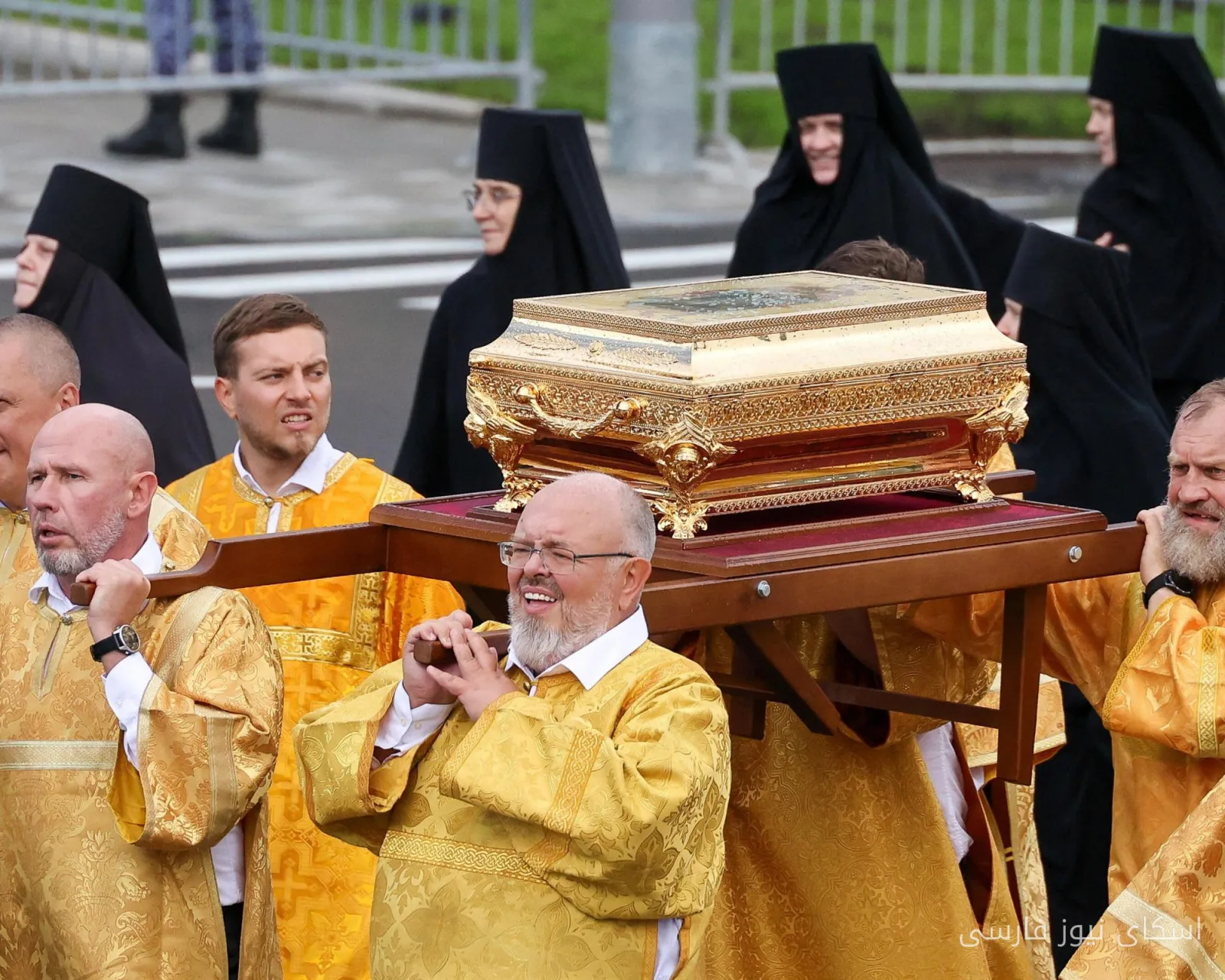
In a controversial move aimed at boosting military morale, the Russian Orthodox Church has sent part of the right hand of Dmitry Donskoy, a prince revered in 14th century Russia for his victory over the Mongol invasions, to the war front in Ukraine. These remains are considered a relic and are believed to help soldiers achieve victory on the battlefield.
Transfer of Historical Remains to the War Front
The remains have been moved to Russian-occupied areas in eastern Ukraine and are currently being transported along the front lines. The church believes these relics can serve as a source of inspiration and spiritual strength for the soldiers, while this action has faced significant criticism and raises questions about religion and war in today's world.
Dmitry Donskoy, who defeated the Mongols in the battle of Kulikovo in 1380, is recognized as a national symbol in Russian history. Now, sending part of his remains to the war front is seen as an attempt to revive this symbol in contemporary times.
Cultural and Social Implications
This move has not only created religious and cultural tensions in the region but has also raised many questions about the use of religion as a tool to justify military actions. As the war in Ukraine has become one of the most significant global crises, this action could provoke nationalist and religious sentiments on both sides.
While some view this action as a sign of unity and solidarity between soldiers and their country's history, others see it as a tool to justify violence and war. This clearly illustrates how history and religion can be at the heart of modern wars and have a profound impact on the collective psyche.